
Project Management vs. Construction Management: What’s the difference?
In real estate and construction, it is common to see the terms project management and construction management used interchangeably. So, what is the difference?
They are closely related, and both play a key role in a project. However, they are not the same, and confusing the two can leave gaps in oversight.
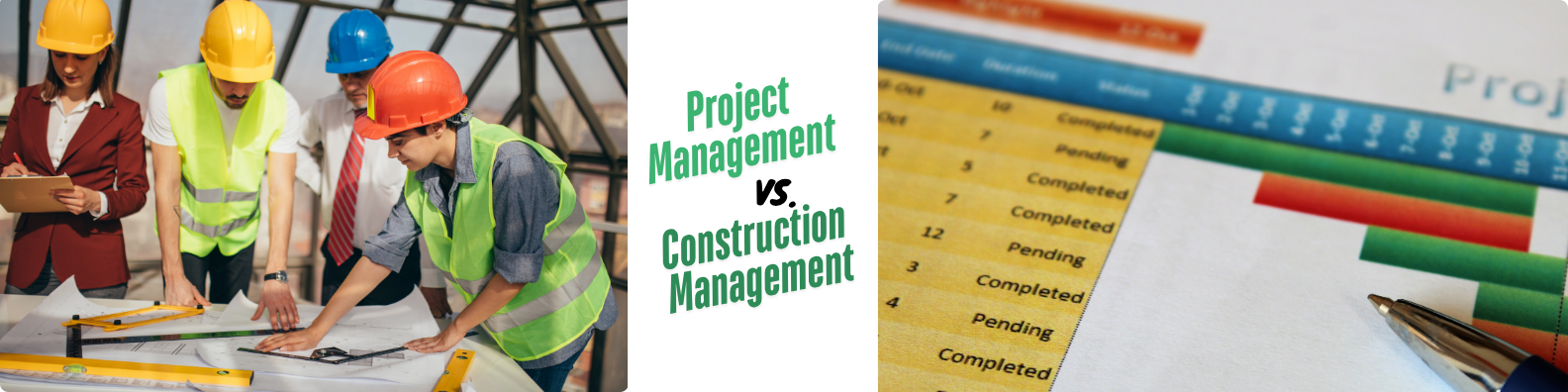
Put simply, construction management helps manage the work. Project management helps manage the project.
This distinction matters because a project can have strong construction oversight and still struggle if the broader process is not properly managed. Construction is a major part of the process, but not the only factor in a successful project.
Construction management is focused on executing the plan. It is the boots-on-the-ground coordination required to keep work moving. An effective construction manager tracks field progress, coordinates contractors and subcontractors, addresses field conditions, and helps maintain the construction schedule.
Project management looks at the larger picture and begins well before an architect puts a design on paper and continues beyond completion of the work. A project manager helps organize scope, budget, design coordination, procurement, approvals, schedule, and stakeholder communication. Once construction begins, those decisions do not stop. They become even more important.
Many complications that appear during construction actually begin before construction starts. A weak pre-construction phase, unclear scope, unresolved design issue, or lack of communication can quickly turn into delays and cost overruns once work is underway. By the time those issues reach the field, they are more expensive and difficult to resolve.
This is where strong project management provides value. The role is not simply to monitor construction activity. It is to manage the process around construction: decisions, communication, documentation, budget tracking, approvals, and coordination between all parties involved.
Owners are often pulled into a project from every direction. The design team may need direction. The contractor may need approvals. Residents or tenants may need updates. Stakeholders may need information before making strategic decisions. Without a central
point of management, communication becomes fragmented, and the owner is left playing middleman while the project keeps moving.
At Ponte Project Management, our role is to help owners manage the full project lifecycle. Construction is critical, but successful outcomes depend on more than construction alone. A well-managed project is about making sure the right decisions are made at the right time, with the right information, by the right people.